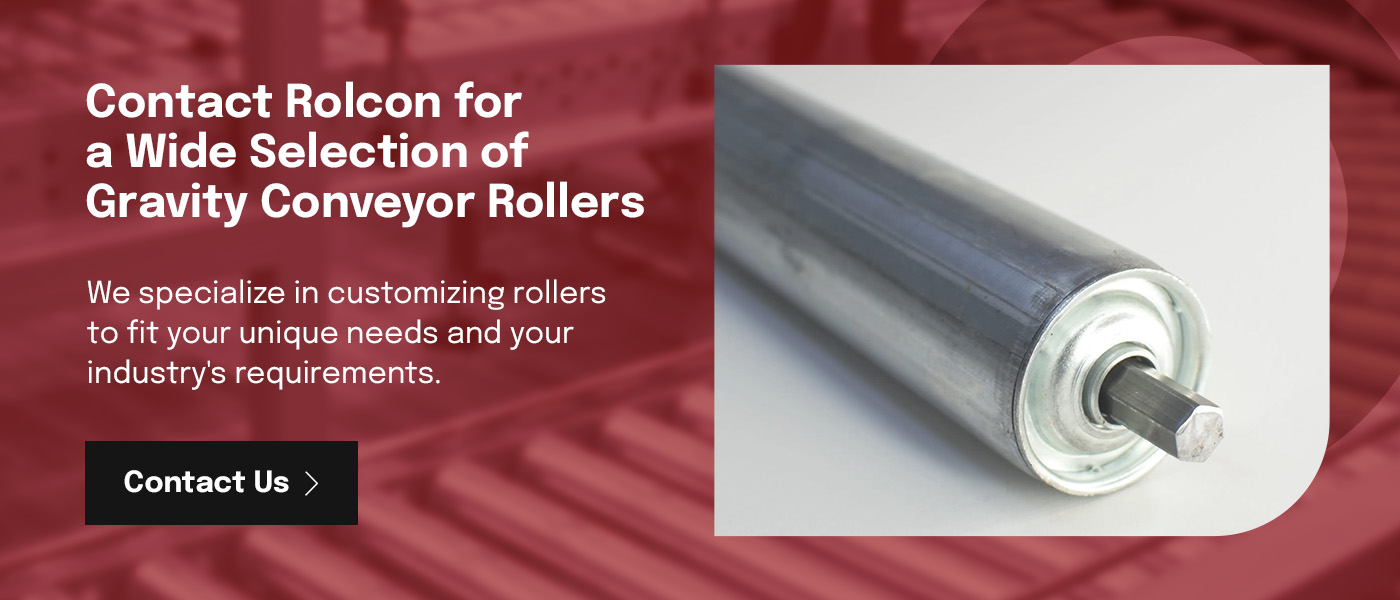
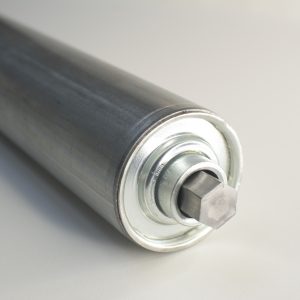
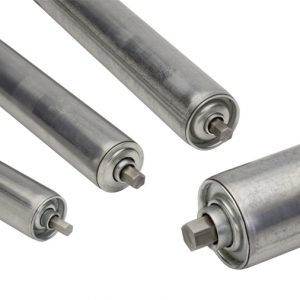
Rolcon offers gravity conveyor rollers that cover a wide range of applications, from light and medium to heavy-duty.
Our gravity rollers are manufactured to fit into a slightly inclined frame and use gravity to move items along a conveyor. At Rolcon, we customize high-quality gravity rollers that meet and exceed Occupational Safety and Health Administration (OSHA) standards, reduce vibration and extend the life of your conveyor systems. RG series rollers are an excellent choice for new and replacement conveyor roller applications and fit almost any type of conveyor system.
Applications of Gravity Conveyor Rollers
Our custom and standard gravity rollers are fit for use in low-speed or gravity-feed conveyor system applications across numerous industries. They’re suitable for helping transport small and large boxes, crates, pallets and tote boxes. Some of the industries where gravity rollers might be ideal include:
- Food and beverage
- Packing and logistics
- Postage and couriers
- Distribution and warehousing
- Air cargo and airports
- Loading docks
- Assembly areas
Features and Benefits of Gravity Rollers
Gravity rollers rely on a system’s slope, natural thrust and frictional forces to transport materials placed on the conveyor systems. Sometimes, they require a mechanical push to transport the packages along the conveyor. They have many benefits for businesses:
- Suitable for slow applications where the conveyor speed doesn’t exceed 200 feet per minute
- Use commercial-grade bearings to support and move packages and unit items
- Easy installation and simple maintenance requirements
- Affordable due to low purchasing and maintenance costs
- Energy saving as they don’t use any power or electricity to transport packages
- Impressive versatility and application adaptability
- Consistent and efficient service across a range of industries
- Can be used with indoor or outdoor conveyors
- Lightweight and suitable for temporary and permanent applications
- Heavy-Duty Gravity Rollers designed for long-term use
What to Consider When Selecting Gravity Rollers
Rolcon heavy-duty gravity conveyor rollers are available in many options, including different tubing materials, axle styles and coatings. Here are some factors to consider when choosing a gravity roller:
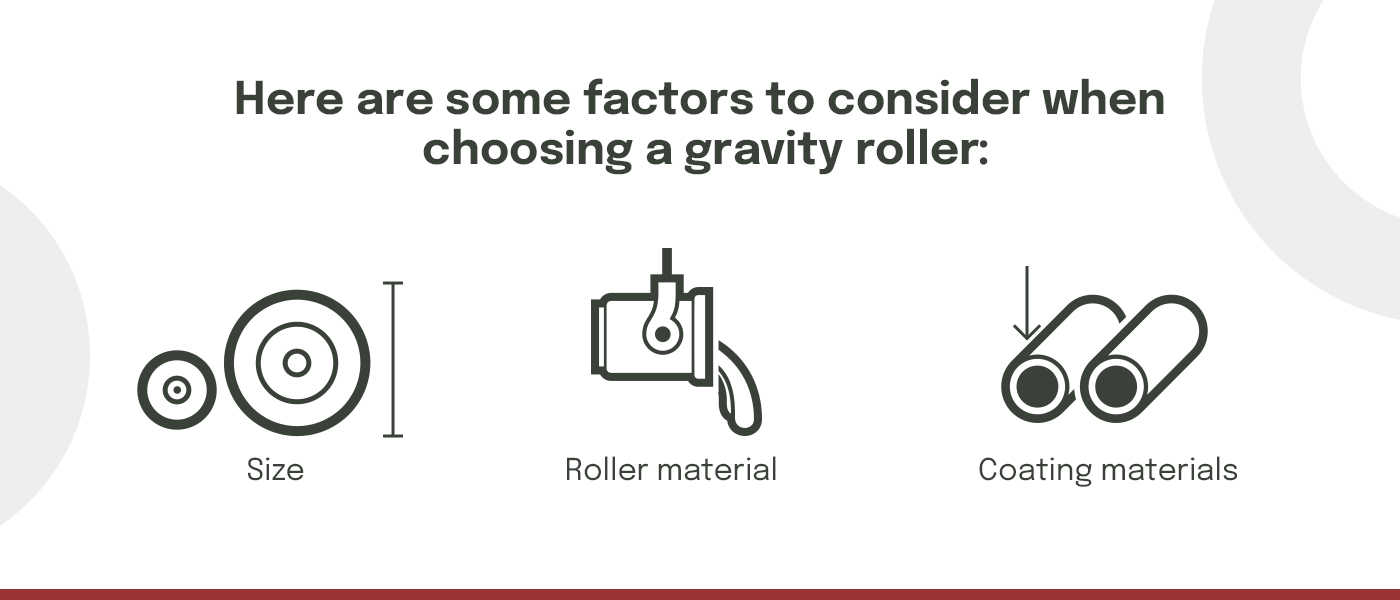
- Size: Our standard gravity rollers are available in diameters of 1 inch up to 2 ½ inches.
- Roller material: Rollers are made using materials such as stainless steel, galvanized steel, raw steel and PVC. Steel gravity rollers are preferred for their durability and smooth and easy-to-clean surface.
- Coating materials: Rollers are often coated using plastic sleeves or rubber coatings. Rubber coatings protect the roller and provide superior grip, anti-static, chemical resistance and durability.
You also need to choose between a range of axels and tubes and options with or without grooves. At Rolcon, we manufacture custom replacement gravity rollers suitable for a range of unique applications. Gravity rollers typically have different weight capacities to fit various applications and conveyor types.
Contact Rolcon for a Wide Selection of Gravity Conveyor Rollers
Rolcon has been in the business of manufacturing rollers and other conveyor accessories since 1988. We specialize in customizing rollers to fit your unique needs and your industry’s requirements. Our team of experts will help you select the materials, dimensions and load ratings for your new or replacement gravity rollers.
If you know the type of gravity rollers you need, contact us for a quote. You can also request more information on our gravity roller options.
Rolcon Rollers also offers custom machine shop services to produce precise parts for any need.